

 English summary
Annual Report on Animal Experiments
English summary
This is the English summary of the 2025 Annual Report on Animal Experiments by Utrecht University and the University Medical Center Utrecht (UMC Utrecht). It provides information about the use of laboratory animals by the two institutions.
This publication was prompted in part by the Dutch Code for Transparency in Animal Testing. It is one of the many tools we use for being transparent about experiments on animals. For example, there are the very informative websites of the Animal Welfare Body Utrecht, the DEC Utrecht and the 3Rs Centre Utrecht.
Accountability
At Utrecht University and UMC Utrecht, research in the life sciences (both veterinary and medical-biological) is carried out. Animal experiments are conducted in addition to experiments based on, for example, cell and tissue culture techniques, computer simulations and experiments on human volunteers. Laboratory animals are also used for education and training. All animal use is performed with great care, under supervision of the Utrecht Animal Welfare Body.
Not, unless...
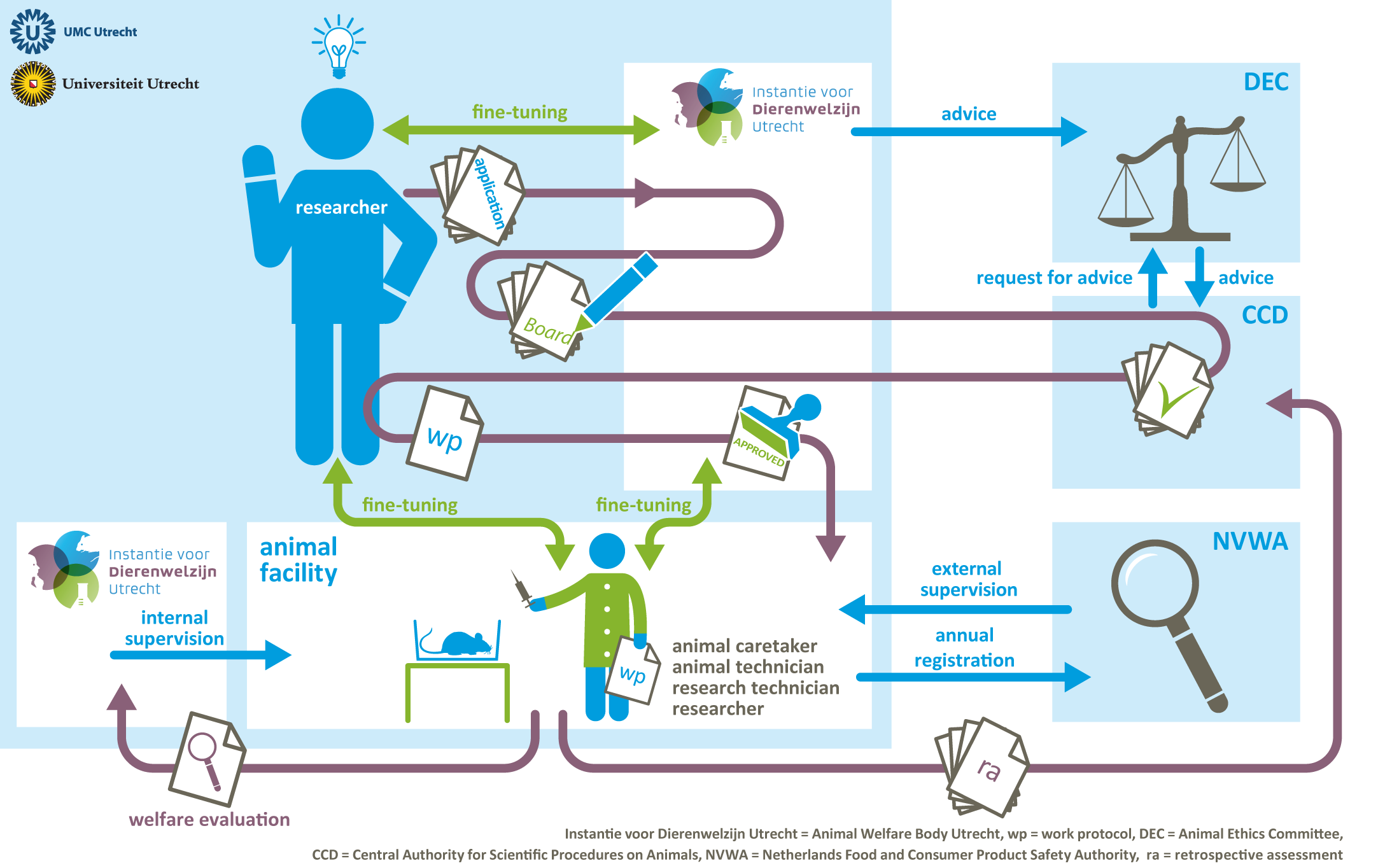
The Dutch Experiments on Animals Act (2014) stipulates that animal experiments may only be carried out if there is really no other option ("not, unless..."). That is, only if there is no animal-free way to achieve the same goal (Replacement). The point of departure is that animals can experience positive and negative emotions and have an intrinsic value. If animal use is inevitable, it is mandatory to see whether that animal experiment can be improved with respect to Reduction of the number of animals and Refinement by, for example, improvement of housing, supervision and procedures. This rule has been elaborated into a set of requirements and steps to take.
From idea to animal experiment
Figures
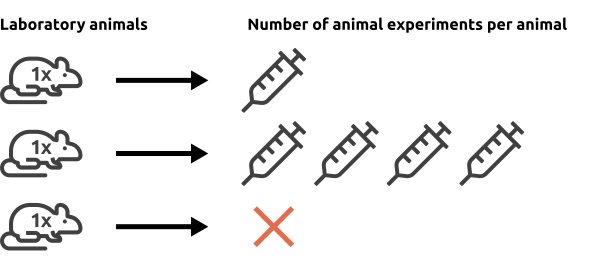
The number of laboratory animals does not equal the number of animal experiments, since on the one hand animals have been re-used in other experiments, and on the other hand animals were bred as laboratory animals without being used in experiments. Both numbers are kept as low as possible.
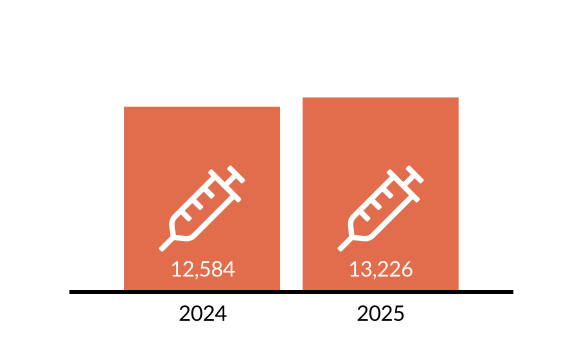
Number of animal experiments
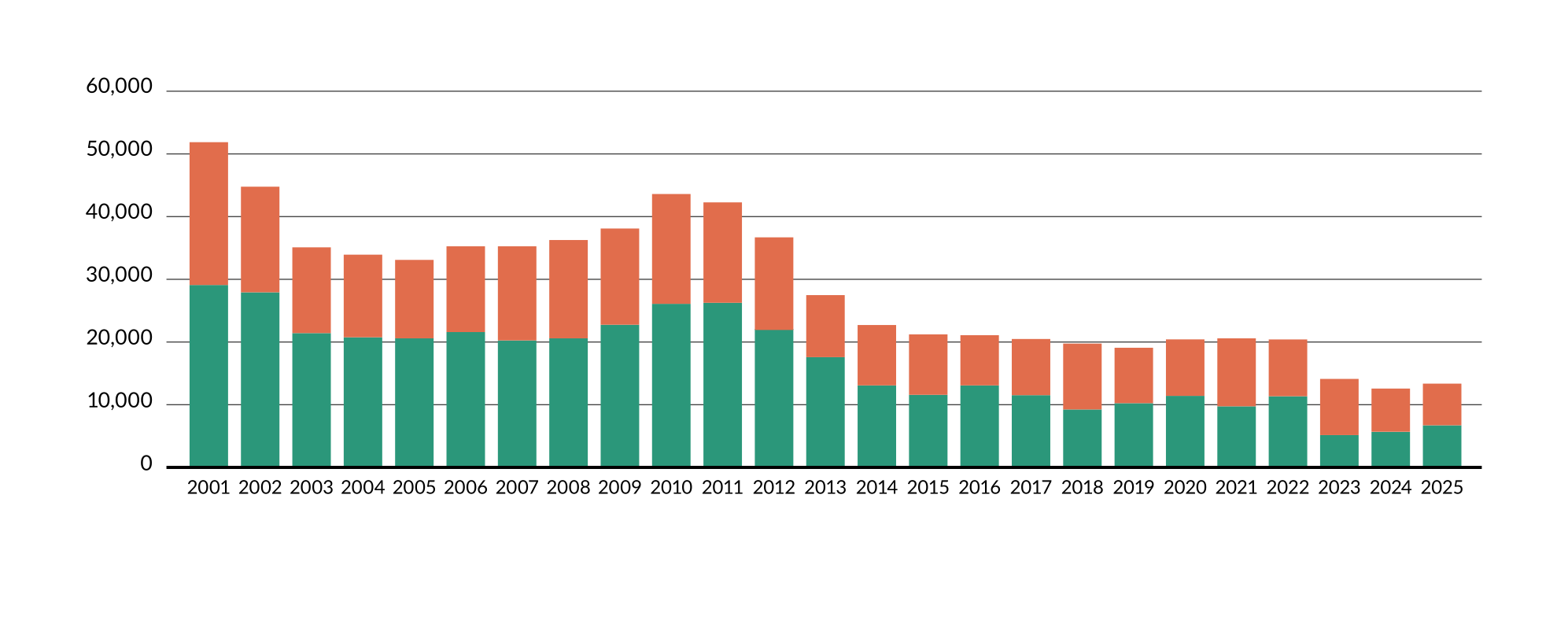
Trend in the number of animal experiments
Over the period 2001-2025, the number of animal tests performed by Utrecht University and UMC Utrecht decreased from 51,900 to 13,226. Especially in the period 2010-2014, there was a substantial decrease in the number of animal experiments. After several years of stagnation, another sharp decline was visible in 2023 and 2024, followed by a small increase in 2025. The number of mice and rats shows a steady decreasing trend from 15,595 to 9,011 in the period 2015 - 2025 (the period in which the amended Animal Experiments Act is in force). Because the number of animal experiments is relatively low, fluctuations in experiments in which large numbers of animals are used may have a greater effect on the total. This is also the case in 2025, since 2,635 zebrafish were used in experiments (which is 2,447 more than in 2024).
Utrecht University
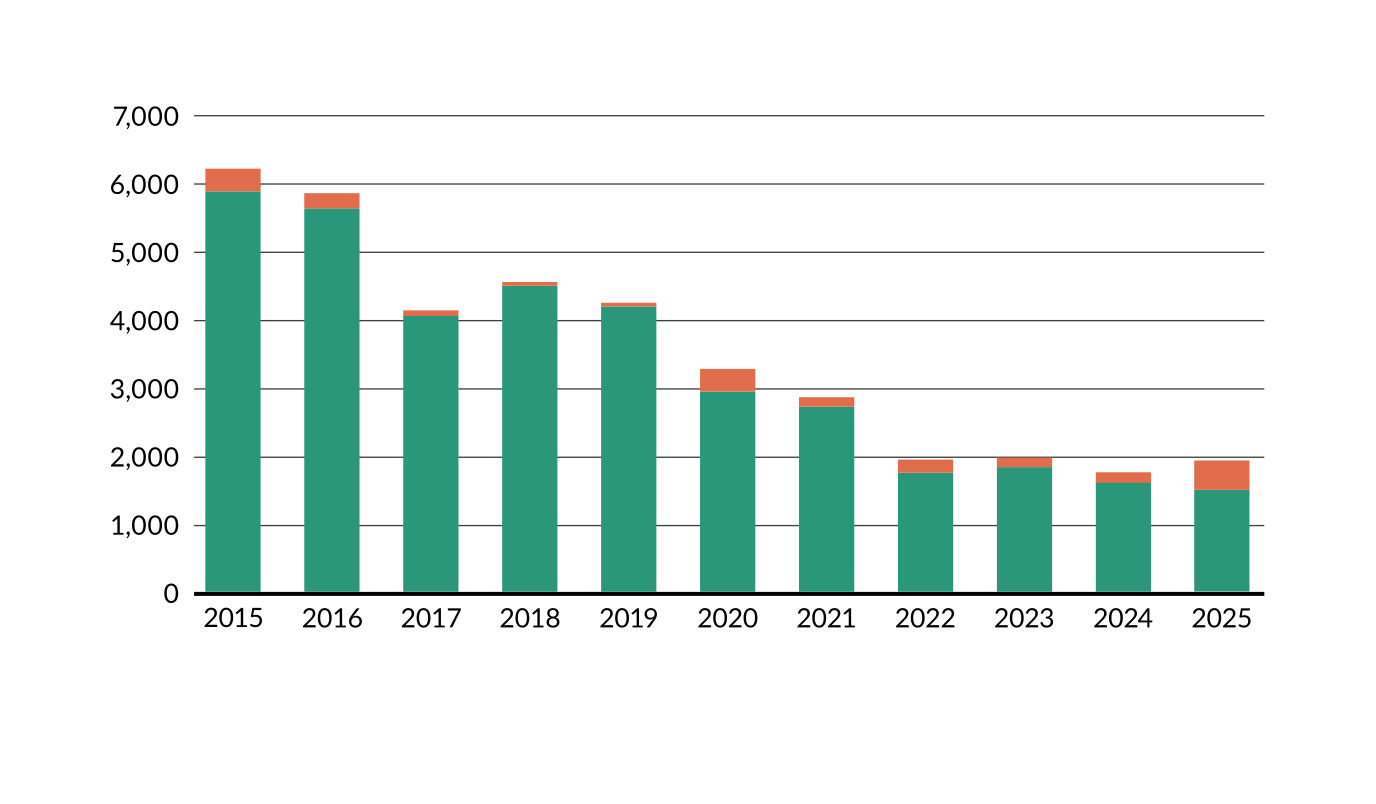
Trend animals used in education
Since 2015, the number of animal experiments for education has decreased by 68% from 6,230 to 1,786. This is a result of an active policy to reduce animal testing for education wherever possible. Compared to 2024, there is a slight increase in animal testing for educational purposes (of 141 animals). This can be attributed primarily to an increase in continuing education for professionals.
Utrecht University
Purpose
67% of the animal experiments were conducted for fundamental research: research into processes, such as research into the functioning of organs. In fundamental research, the way research outcomes will be applied is not yet clear. 18,5% was conducted for applied research and translational research. Applied research is research that is directly aimed at an application, for example a specific medical therapy. Translational research connects fundamental and applied research, and often includes translation from results of animal research to clinical application for humans. Finally, laboratory animals are used in education and training, for example in veterinary and laboratory animal science courses (14,5%). Less than 0,5% related to breeding of animals with a harmful phenotype.
Animal species
For each research project, the most suitable animal species is used. More than half of the experiments are conducted with mice. In addition to mice, rats and zebrafish were also used frequently. Other animals used in experiments and education are chickens, pigs, cattle, horses, pigeons, dogs, sheep, rabbits, goats, ferrets and elephants.
Discomfort
Discomfort is the legal term for all negative experiences that laboratory animals experience through animal experiments. It is mandatory to classify discomfort into the categories of mild, moderate and severe discomfort, or non-recovery (the animal dies during anesthesia having had no previous discomfort). A permanent effort is being made to keep discomfort levels as low as possible.
Mild: 65%
Moderate: 31%
Severe: 2%
Non-recovery: 2%
Unlike in other European countries, animals that are killed for their tissues are classified as animal experiments in the Netherlands. These animals fall under the 'Mild' category, and 36% of all animal experiments in this category belong to this specific subcategory.
Bred but not used
Utrecht University and UMC Utrecht are doing their utmost to minimize the number of animals killed without being used for research or education. In 2025, 10,804 animals were killed without being used. 4,895 of these have been used for breeding purposes. The other 5,948 involved animals not suitable for experimental purposes because of gender, age, genetic profile or health problems.
Rehoming
In accordance with our policy, all surplus animals are given a chance for rehoming, taking into account certain conditions such as the safety, welfare, and health of both humans and animals. Most of these animals have been used in animal experiments involving mild discomfort, such as behavioral research or education, or were bred as laboratory animals but not actually used in an experiment. Genetically modified animals are excluded on grounds of legislation. In 2025, 38 rats and one dog found a new home.
Invisible animal use
In our 2024 annual report, we reported for the first time on invisible animal use associated with the use of fetal calf serum and BME. We will update this report every few years.